Understanding Feed Conversion Ratio (FCR) and How to Calculate It
General • 2026-07-30
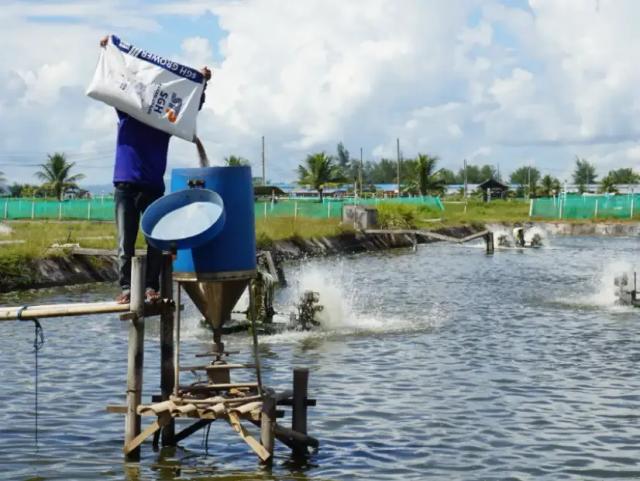
Feed Conversion Ratio is the ratio of the amount of feed consumed to the weight gained by the fish or shrimp produced.
Ask any farmer where the majority of their production costs go. The answer is almost always the same: feed. Accounting for 60 to 70 percent of total expenses, this figure makes one term crucial to understand: Feed Conversion Ratio or FCR. Many farmers are already familiar with the term, but quite a few still do not truly know how to calculate and use it to make informed decisions.
In reality, understanding FCR is equivalent to understanding exactly where your production budget is going. This article will explain FCR in simple terms, complete with formulas, calculation examples, and practical steps to lower the ratio.
A Simple Definition of FCR
Fundamentally, FCR answers one practical question: how many kilograms of feed are required to produce one kilogram of meat? The lower the number, the more efficient your farming operation is.
For instance, an FCR of 1.2 means you only need 1.2 kg of feed to add 1 kg of fish weight. Compare this to an FCR of 2.0, where 2 kg of feed is required for the same result. That difference is not just a number on paper; it represents actual waste that directly cuts into your profits at the end of the cycle.
How to Calculate FCR
The formula is quite simple:
FCR = total feed given ÷ total weight gain
To make it clearer, let us look at an example. Suppose in one cycle you consume 1,500 kg of feed, while the total fish weight increases from 200 kg to 1,200 kg, meaning there is a weight gain of 1,000 kg.
FCR = 1,500 ÷ 1,000 = 1.5
This means every 1.5 kg of feed you provide yields 1 kg of fish growth. From this single number, you can already estimate feed requirements and costs for the next harvest.
What is Considered a Good FCR?
There is no magic number that applies to all commodities because each type of fish and shrimp has a different ideal FCR range. As a general guideline in the field:
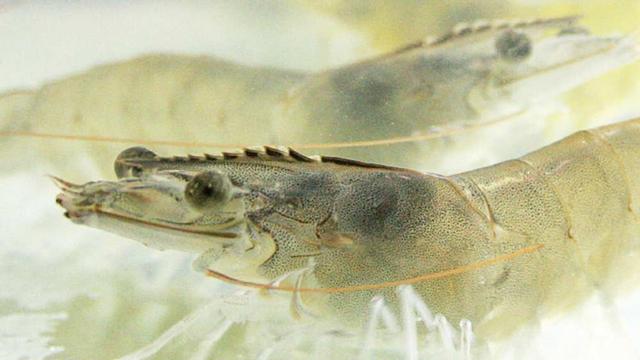
- Vannamei shrimp: Efficient FCR is in the range of 1.2 to 1.5
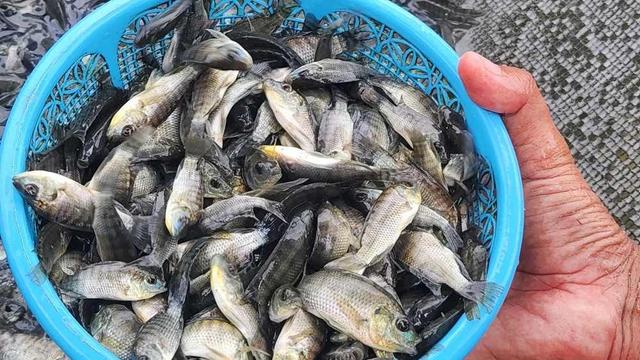
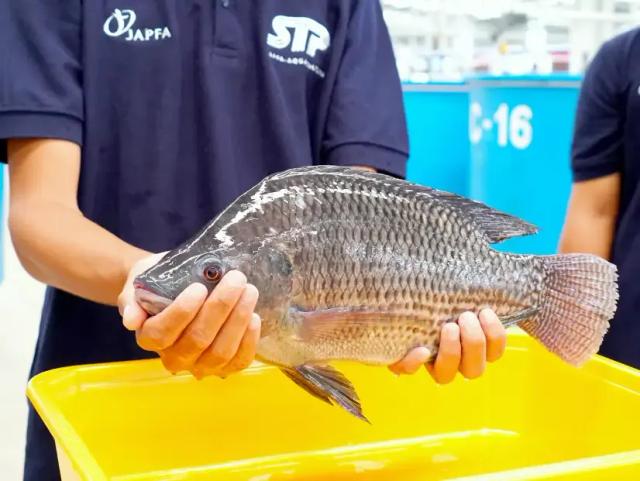
- Tilapia: Range of 1.4 to 1.8
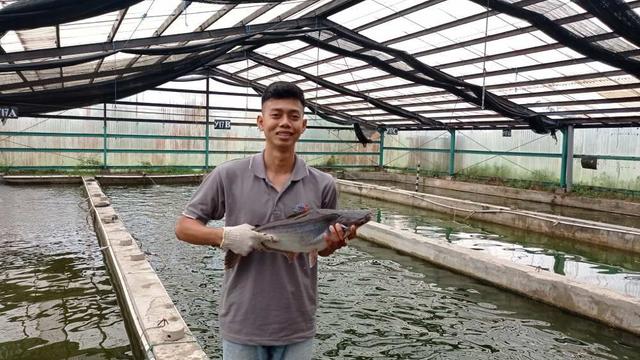
- Pangasius: Range of 1.2 to 1.8
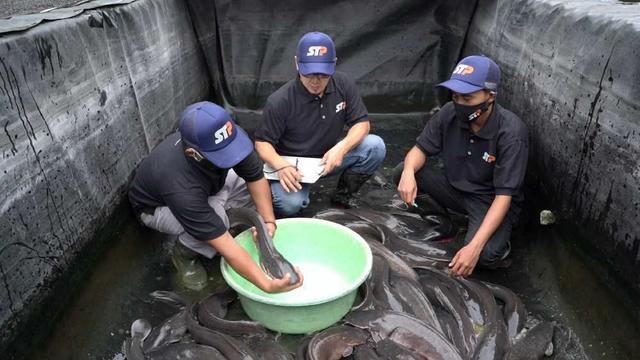
- Catfish: Range of 0.8 to 1.2
These figures are merely general benchmarks. What is far more important is monitoring the FCR trend in your own ponds from one cycle to the next. Once the FCR starts creeping up, consider it a signal that something needs to be fixed, whether it is the feed, water quality, or feeding method.
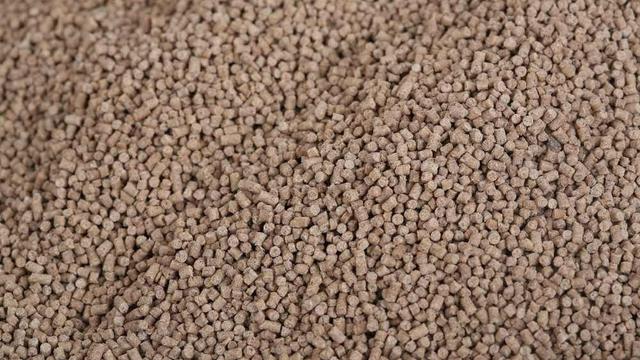
For those focusing on tilapia, selecting the right tilapia feed from the beginning of the cycle will largely determine whether the FCR can be pushed closer to the lower limit of that range. Similarly, for vannamei, selecting vannamei shrimp feed that suits the growth phase plays a major role in maintaining this efficiency.
Why FCR is Crucial for Profitability
Because feed is the largest cost component, an FCR difference that looks small on paper can mean a lot at the end of the harvest cycle. Imagine two ponds with the exact same harvest target. Pond A has an FCR of 1.3, while Pond B has an FCR of 1.7. To achieve the same harvest, Pond B must purchase significantly more feed, and on a scale of thousands of kilograms, this difference can equal millions of rupiah evaporating into thin air.
Let us calculate this with real numbers. If the feed price is Rp12,000 per kg and the harvest target is adding 1,000 kg of weight, the pond with an FCR of 1.3 requires 1,300 kg of feed, which is equivalent to Rp15.6 million. Meanwhile, the pond with an FCR of 1.7 needs 1,700 kg, or Rp20.4 million, for the same result. The difference is nearly Rp5 million from feed efficiency alone, and that is just for one pond. It is no wonder that many experienced farmers monitor FCR as seriously as they monitor selling prices.
A low FCR also brings positive side effects. More efficient feed means less decaying waste at the bottom of the pond, preserving water quality and lowering the risk of disease.
5 Practical Ways to Lower FCR
Lowering FCR does not require expensive technology; rather, it requires consistency in the following fundamentals.
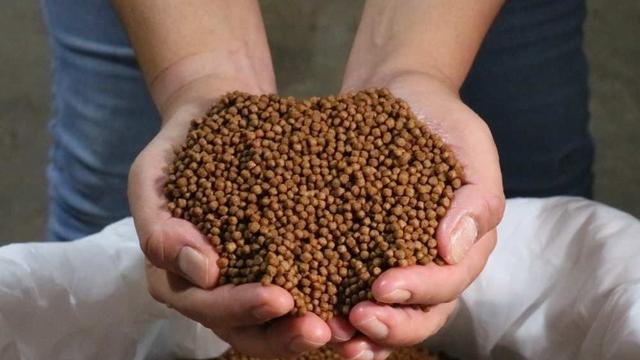
- Use high-quality feed with stable nutrition. Feed with high digestibility ensures more nutrients are converted into meat instead of wasted as effluent.
- Feed according to needs, do not overfeed. Uneaten feed directly increases the FCR. Use a feed tray or conduct regular weight sampling to determine the precise dosage.
- Maintain water quality. Sufficient oxygen and low ammonia levels encourage fish or shrimp to eat voraciously and grow optimally.
- Match the feed to the growth phase. High protein is needed in the early phases, then adjusted during the grow-out stage so the feed is not wasted.
- Record and evaluate every cycle. Calculate FCR routinely and compare it across cycles. This data helps you make decisions based on facts, not just feelings.
The Role of Feed and Fry in Determining FCR
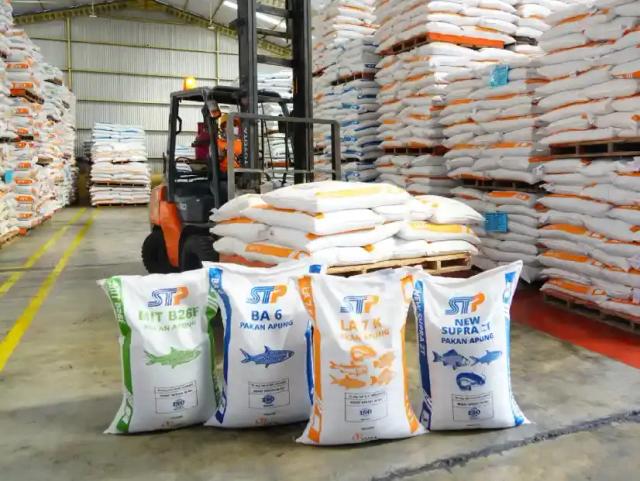
No matter how good the pond management is, FCR will be difficult to lower if the feed quality is inconsistent. Feed with fluctuating formulas disrupts the digestion of fish or shrimp, causing efficiency to drop. Therefore, choosing a feed manufacturer that maintains quality consistency is a long-term investment, not just a seasonal expense.
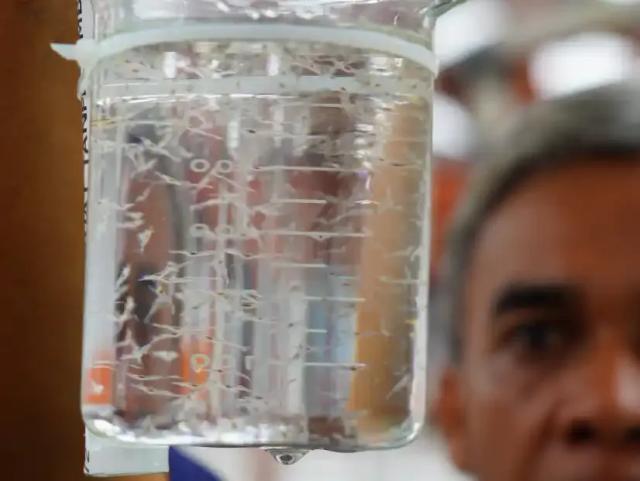
However, feed is not the only factor. Specifically for vannamei shrimp farming, the quality of the fry stocked at the beginning of the cycle also determines how good the FCR can ultimately be. Healthy and uniformly sized vannamei fry will grow more evenly, meaning the feed provided is absorbed more efficiently and not wasted on individuals lagging in growth.
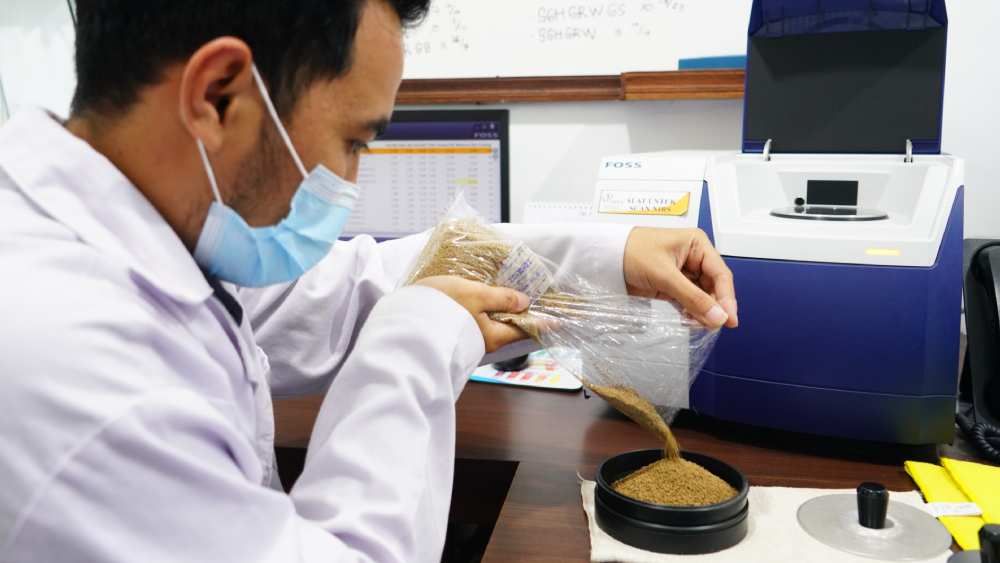
STP, operating since 1987 and a part of JAPFA, formulates every STP feed through laboratory and field tests to maintain its digestibility across various water conditions. You can learn more about selecting the right feed in STP's guide to the best aquaculture feeds.
Conclusion
Feed Conversion Ratio is not just a technical metric; it is a reflection of the efficiency of your entire farming operation. By diligently calculating and monitoring FCR, you can detect problems early, reduce feed costs, and keep the pond environment healthy.
Start with a simple step: record the feed and harvest weight in the next cycle, then calculate the FCR. From that single number, you can make many important decisions with greater confidence.
Frequently Asked Questions (FAQ)
Is a lower FCR always better? Generally, yes, because a low FCR means the feed is more efficient. However, make sure that the low number is achieved without sacrificing the growth or health of the fish. An extremely low FCR accompanied by skinny fish could actually indicate underfeeding.
What is the difference between FCR and FCE? FCR measures feed per weight produced, so the smaller the number, the better. FCE (Feed Conversion Efficiency) is the exact opposite, expressed as a percentage, meaning the larger the number, the better. Both describe the same concept, just from different perspectives.
What causes a sudden spike in FCR? The most common causes are overfeeding, deteriorating water quality, disease, or feed with inconsistent quality. Checking these four factors is usually enough to find the root of the problem.