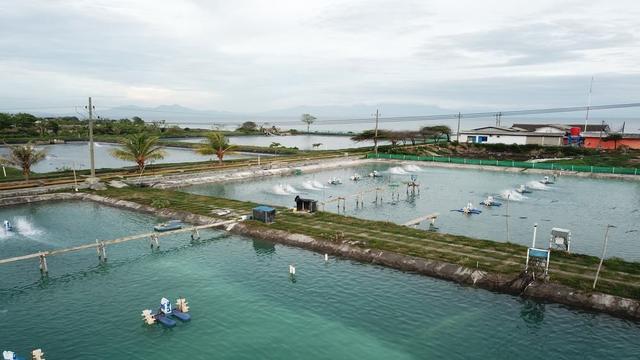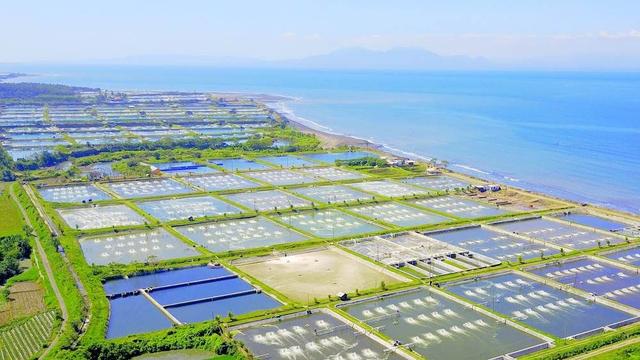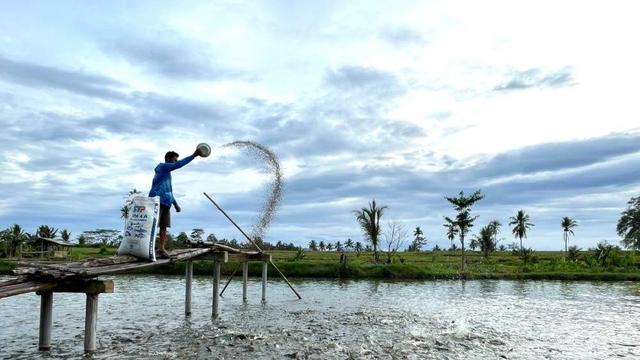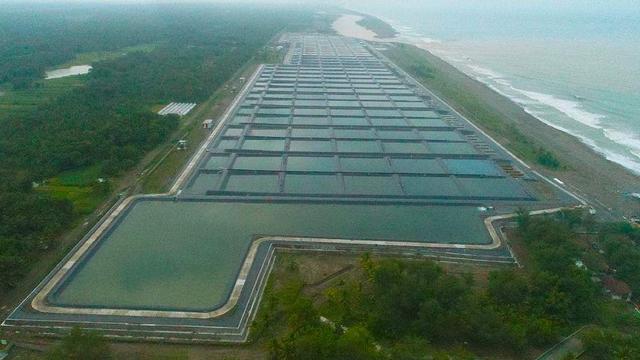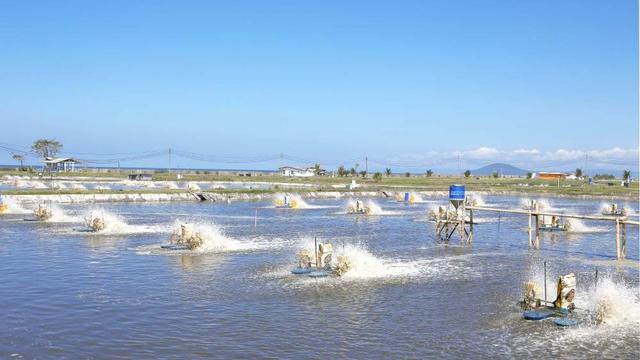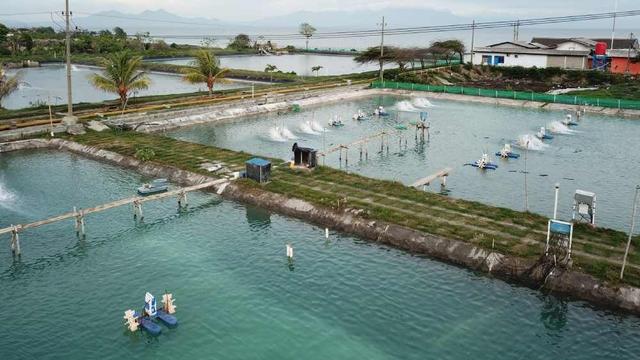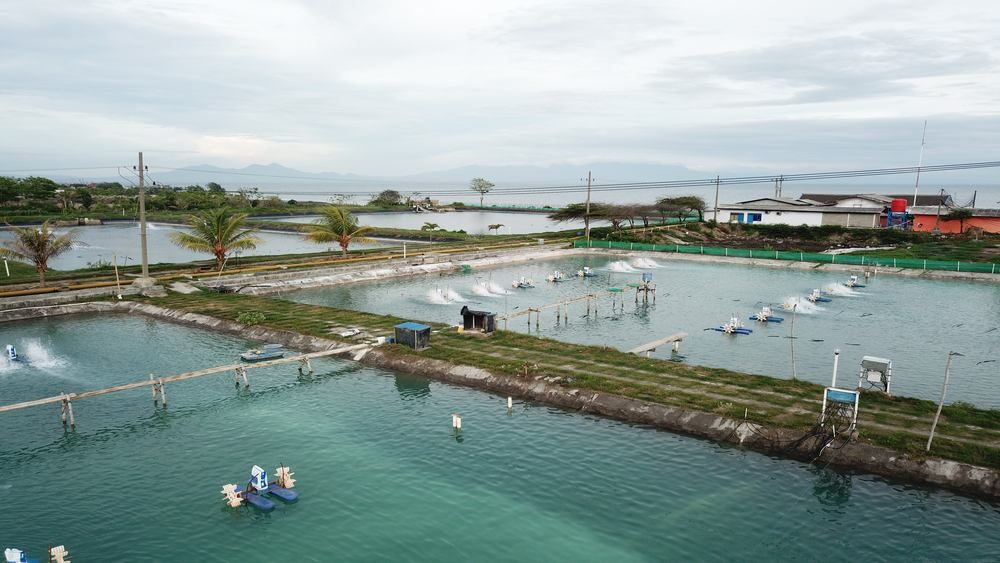
The best pond water color for whiteleg shrimp (vannamei) farming is light brown to brownish-green. That color signals a dominance of diatoms, the plankton group shrimp prefer most as natural feed. Ponds dominated by diatoms typically show faster shrimp growth. Light green is the second-best option and is still considered safe, as it indicates the presence of green algae (Chlorophyta), which produce oxygen during daylight hours. On the other hand, blue-green, dark brown, and reddish-brown water are warning signs that need to be addressed right away. To complement the color reading, water turbidity should be maintained at a Secchi disk depth of 30 to 40 cm.
Reading water color is the cheapest skill a shrimp farmer has. No expensive equipment is needed, just a sharp eye and the habit of checking at the same time every day. The problem is, color alone is not enough. Color tells you what kind of plankton is currently dominant, while turbidity and water quality figures tell you whether those numbers are still under control — two things that are equally important to a successful vannamei operation. This article covers both.
Why water color is used as an indicator of pond condition
Pond water color is almost entirely determined by the type and quantity of plankton living in it. Each plankton group has a different pigment, and those pigments are what reflect a particular color to our eyes. So when water color changes, what is actually changing is the makeup of the community living in the water.
That change matters because different plankton groups affect shrimp differently. Some serve as natural feed and supply oxygen; some compete for oxygen at night; and some produce toxins. The infographic below summarizes the color map along with the corresponding reference values.
Water colors worth aiming for
Light brown to brownish-green. This is the most desirable color. It indicates diatom dominance — the plankton group that is both the most nutritious for shrimp and the most stable in population. According to the Faculty of Fisheries and Marine Science at Airlangga University, diatoms are the primary supplier of natural feed for shrimp, which is why ponds with this water color tend to see relatively faster growth.
Light green. This color signals that green algae, or Chlorophyta, are the dominant group. They produce chlorophyll for photosynthesis, add to the oxygen supply during the day, and can also be eaten directly by shrimp. Light green water is still considered safe as long as turbidity stays in the right range.
What is worth noting is that a healthy pond does not have to be dominated by a single type of plankton. A study by Prastiwi, Fauziah, and Nazran published in the journal Samakia (April 2025) examined intensive vannamei ponds in Banyuwangi and found a mixed composition: green algae at 33.3 to 39 percent, diatoms at 32 to 34 percent, blue-green algae at 5 to 12 percent, dinoflagellates at 7.2 to 9 percent, and protozoa at 7 percent. No single plankton type dominated the pond overwhelmingly.
That is good news for farmers. The realistic target is not water that is 100 percent diatoms, but balanced water where diatoms and green algae are the primary inhabitants and harmful groups are held to a small share.
Colors to watch out for
Dense dark green. This color still comes from green algae, but in excessive numbers. The risk lies in daily swings: daytime photosynthesis pushes pH up, and then at night all the plankton consume oxygen simultaneously, which can cause dissolved oxygen levels to drop sharply near dawn.
Blue-green. This is the color that farmers dread most. It signals blue-green algae, or Cyanophyceae, taking over. This group can fix nitrogen directly from the air, so its population can explode even when nutrients in the water have been limited. The effects on shrimp include slowed growth and a toxin risk. According to Claude Boyd of the Global Seafood Alliance, a dense blue-green bloom causes wide daily oxygen swings, its foam layer absorbs heat and raises surface temperature, and most dangerously, the algae can die off all at once — that mass die-off depletes oxygen faster than aerators can replenish it.
Dark brown. This color is associated with dinoflagellates and in practice is often accompanied by health problems such as black gill disease and swelling. When symptoms like these appear, cross-referencing them with a list of common shrimp diseases can help narrow down the most likely cause.
Reddish-brown. This color indicates Pyrrophyta and is considered the most dangerous, as it can lead to mass shrimp mortality. Any shift toward this color needs to be addressed the same day it is noticed, not the following morning.
Color alone is not enough — check turbidity too
Two ponds can both show light green water but face very different outcomes, because in one pond plankton may be too sparse and in the other it may already be too dense. That is why color always needs to be read alongside turbidity.
Measure using a Secchi disk at the same time every day, ideally around 9 in the morning so readings can be compared consistently. Based on the General Guidelines for Shrimp Aquaculture in Ponds from the Ministry of Marine Affairs and Fisheries (KEP.28/MEN/2004), the ideal transparency is 30 to 40 cm. Above 40 cm means plankton is too sparse and sunlight is reaching the pond floor. Below 25 cm means the water is too dense, making nights risky.
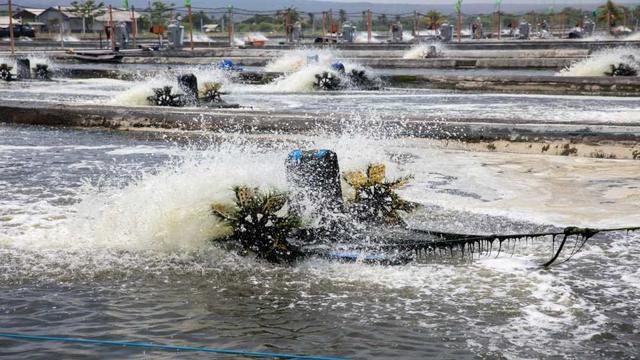
Three other numbers are worth tracking alongside these. pH should be maintained at 7.5 to 8.5, with the day-to-night fluctuation kept reasonably narrow. Dissolved oxygen should stay in the optimal range of 4 to 10 mg per liter and should never drop to the minimum threshold of 3 mg per liter. Alkalinity should be kept at 100 to 150 mg per liter per SNI 01-7246-2006, because alkalinity is what prevents pH from swinging with plankton activity. To support nighttime oxygen supply, aeration plays a decisive role, and a review of paddlewheel aerator function and placement in shrimp ponds can serve as a useful reference.
How to steer water color toward diatoms
Water color is not something that simply has to be accepted as-is — it can be guided, mainly through fertilization. Claude Boyd notes that shrimp farmers have successfully promoted diatom growth by applying nitrogen at roughly 10 to 20 times the amount of phosphorus. The logic is straightforward: blue-green algae thrive when phosphorus is abundant because they can draw nitrogen directly from the air. By limiting phosphorus and increasing nitrogen, that advantage disappears and diatoms gain the room they need to grow.
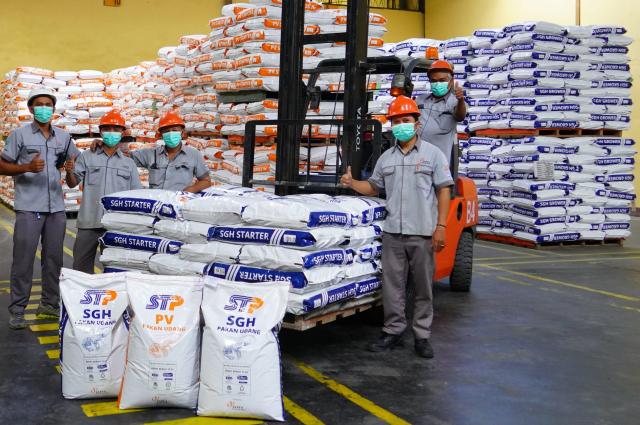
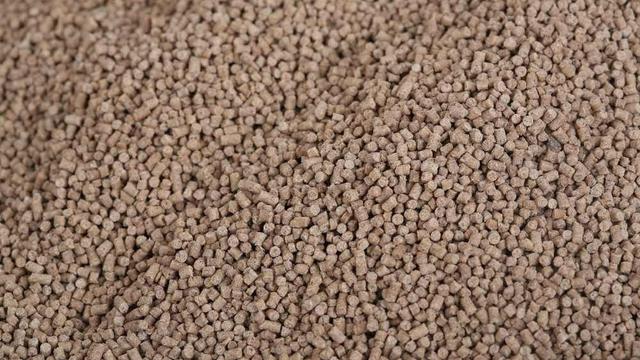
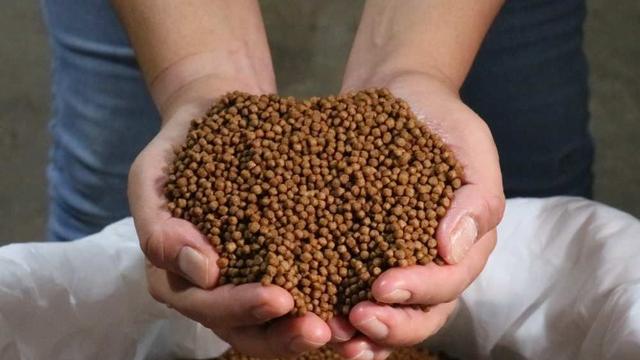
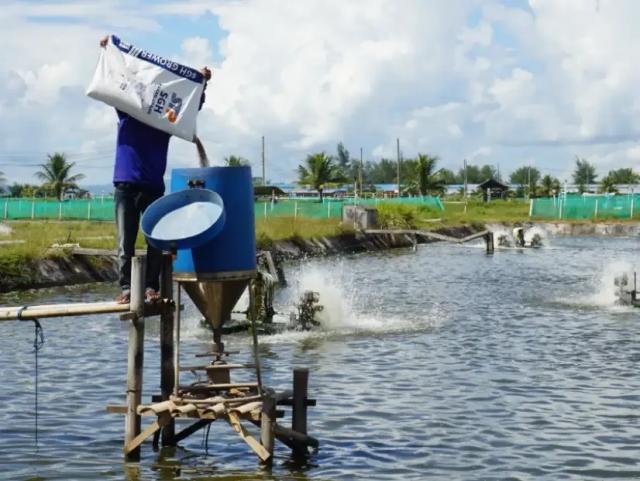
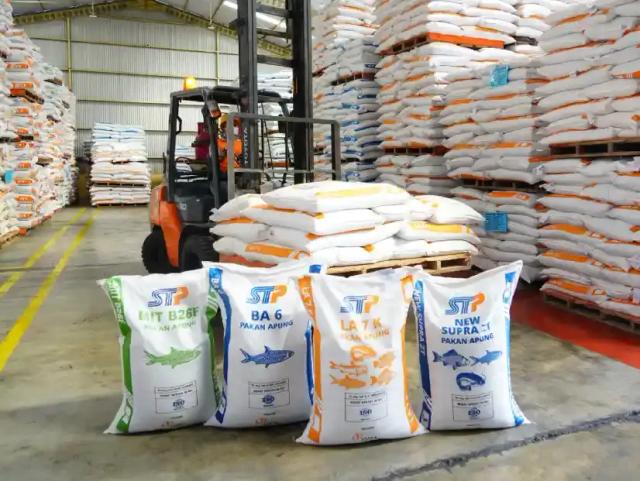
Beyond fertilization, managing feed quality and portion size also has a major impact on achieving maximum harvests. Leftover feed accumulating on the pond floor is a source of phosphorus and organic matter that feeds the unwanted plankton groups. STP’s tiered vannamei shrimp feed lines are formulated by growth phase to make portion control easier, which keeps the organic load in the water in check and results in more productive harvests.
When to act
Not every change in water color calls for a major response. What does require immediate action is a sudden change.
Water that shifts color overnight — say, from green to clear or to brown — usually signals a plankton crash. The first steps are to reduce feeding, extend aeration hours, and replace a portion of the water with clean water from a reservoir pond. Conversely, water that is gradually shifting toward blue-green should be addressed by limiting phosphorus input, adding probiotics, and diluting the water incrementally.
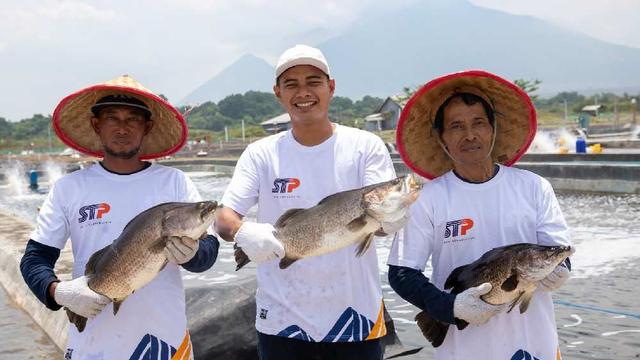
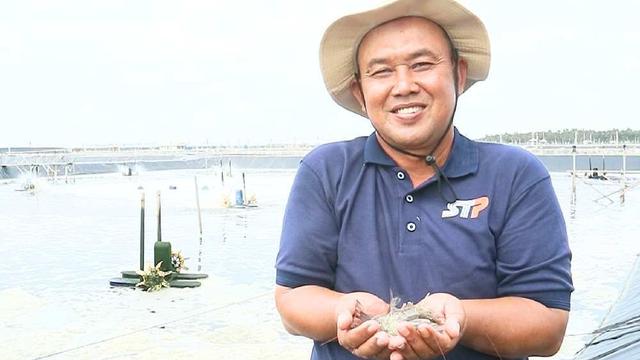
Reading water color is a small habit with large results, and it is part of what it takes to run a successful vannamei shrimp operation. If you want to put together a water management plan suited to your specific pond conditions, STP’s technical team has been supporting farmers directly on-site since 1987 as part of JAPFA, helping make vannamei shrimp operations more controlled and profitable. The fundamentals of that management can be explored through STP’s vannamei shrimp aquaculture guide.
FAQ
What is the best water color for vannamei shrimp?
Light brown or brownish-green, because it indicates diatom dominance. Diatoms are the best natural feed for shrimp and are associated with faster growth. Light green from green algae is also considered safe as long as turbidity stays within the right range.
Why is blue-green pond water dangerous?
That color indicates blue-green algae, which can fix nitrogen from the air and are therefore prone to population explosions. This group slows shrimp growth, risks producing toxins, causes wide oxygen swings, and can die off all at once, suddenly depleting dissolved oxygen.
What is the ideal pond water transparency?
Between 30 and 40 cm measured with a Secchi disk, per KEP.28/MEN/2004. Above 40 cm means plankton is too sparse, while below 25 cm means it is too dense, making nights vulnerable to oxygen depletion.
Why does water color matter for maximum vannamei shrimp harvest?
Water dominated by diatoms provides abundant natural feed and sufficient oxygen, which allows shrimp to grow faster while reducing the need for formulated feed. Stable water color also signals a lower disease risk. That combination of faster growth, better feed efficiency, and healthier shrimp is what makes water color one of the defining factors in achieving maximum yields in vannamei shrimp farming.