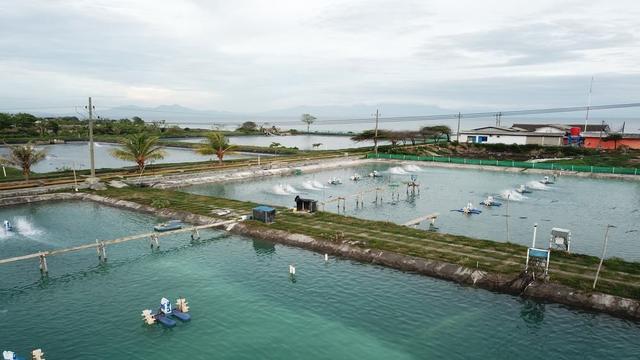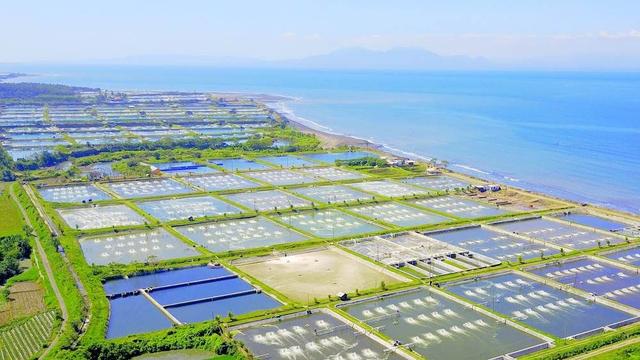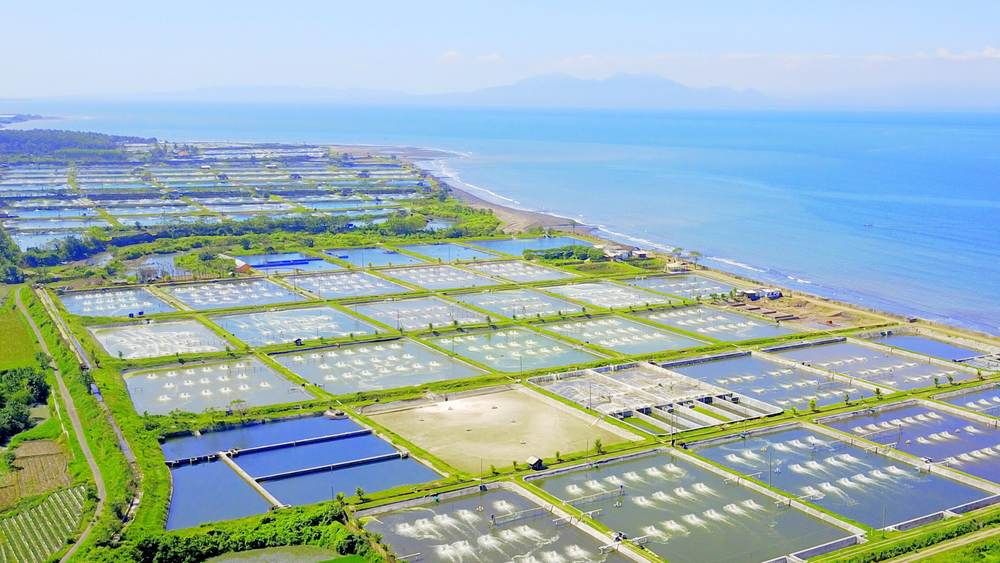
Greening shrimp pond water for vannamei farming involves five sequential steps: dry and sterilize the pond bottom, fill with filtered water to a depth of 80 to 120 cm, apply organic and inorganic fertilizer as sources of nitrogen and phosphorus, add probiotics so that beneficial bacteria can establish dominance early, then leave the water to absorb sunlight for approximately five to seven days. The water is ready once it turns light green or light brown and the Secchi disk reading falls between 30 and 40 cm. Only after that point should shrimp seed be stocked.
Green water is not merely about appearance. It signals that phytoplankton has grown well, and those plankton are what supply natural feed, moderate water temperature, provide oxygen during daylight hours, and suppress harmful bacteria on the pond floor. Many farmers assume green water simply appears on its own, but stable plankton growth has to be cultivated and maintained deliberately. The sections below explain why that is the case, how to grow plankton, and how to keep it from crashing mid-cycle.
Why green water matters in shrimp ponds
Green water is the result of phytoplankton growth microscopic microalgae that float throughout the water column. Based on widely cited references in Indonesian aquaculture literature, the water colors most favorable for vannamei shrimp farming are light green and light brown, because those colors indicate a dominance of diatoms and Chlorophyta, the two plankton groups that are most beneficial for shrimp.
The first benefit is as natural feed. In the early days after stocking, shrimp seed draw on plankton and microorganisms in the water as supplemental nutrition beyond formulated feed. That natural intake helps seed adapt and grow more quickly during the most vulnerable phase.
Green water also acts as a natural shade layer that dampens sunlight intensity, keeping water temperature more stable between day and night; supplies oxygen during daylight hours through photosynthesis; blocks light from penetrating to the pond floor, which limits the growth of bottom algae and algal mats; and absorbs ammonia, as plankton use the nitrogen from leftover feed and shrimp waste to grow.
A benefit that has received increasing attention in disease research comes from a review in the journal PLOS Pathogens (2014), which found that stocking shrimp into water with an already-mature microbial community rich in algae provides better protection against AHPND/EMS, the early mortality disease in shrimp. Water that has just been completely disinfected and is still essentially “empty,” by contrast, becomes fertile ground for fast-growing bacteria like Vibrio, because their natural competitors were eliminated along with everything else. Well-maintained green water is therefore one of the most consistently underestimated pillars of vannamei farming, despite having a significant effect on harvest outcomes.
Steps to growing green water before stocking
Growing plankton is not an instant process. The following is the sequence that vannamei farmers typically follow before stocking seed.
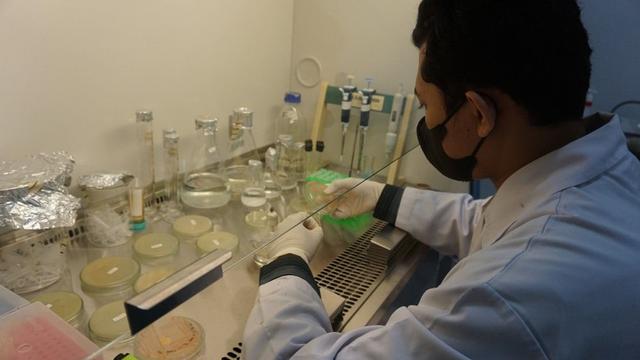
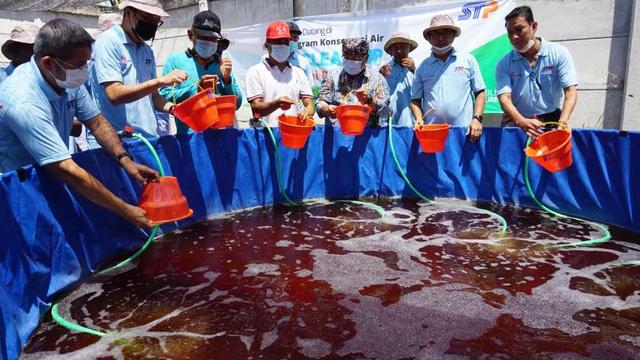
1. Pond bottom preparation and sterilization. Dry the pond bottom, remove black sludge left from the previous cycle, and correct soil pH with lime application. Sterilizing the bottom and equipment at this stage is important for breaking the disease cycle. STP’s Perosolv, a combination of nano silver and hydrogen peroxide can be used to clean the bottom and equipment before plankton growth begins.
2. Filling with filtered water. Fill the pond with water that has been filtered through a mesh screen or fine netting to the ideal depth, generally 80 to 120 cm. Filtering keeps out wild fish, eggs, and disease carriers.
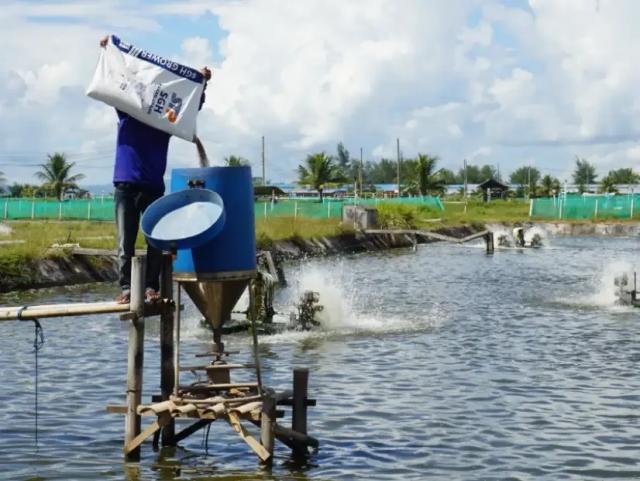
3. Fertilization. Apply fertilizer to stimulate plankton growth. A combination of organic fertilizer such as fermented rice bran or molasses with inorganic fertilizer as a source of nitrogen and phosphorus provides the nutrients that microalgae need. The goal is not simply to turn the water green, but to regulate turbidity and maintain plankton stability over time.
4. Adding probiotics. Introduce probiotics so that beneficial bacteria establish dominance in the water first, helping break down organic matter while suppressing harmful bacteria.
5. Growing the plankton culture. Allow the water to sit in sunlight for five to seven days until its color shifts to a light brownish-green and its transparency falls within the target range.
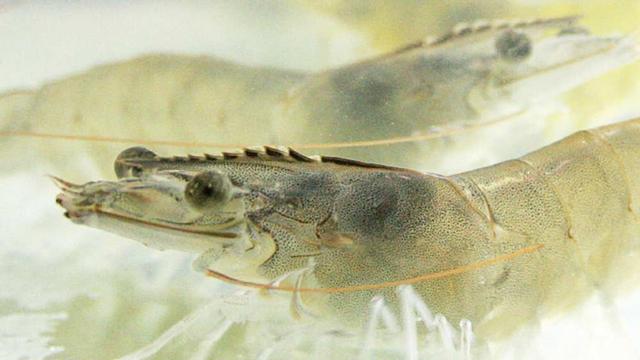
Once the water has fully matured and its color has stabilized, shrimp seed can be stocked — this step significantly reduces stress during the early rearing phase. Make sure the seed used is of high quality. STP’s Super PL, for example, is reared to the PL30 stage in a biosecure hatchery, giving it higher resilience when introduced to freshly matured water. A guide on selecting vannamei shrimp seed can serve as a useful reference before stocking.
Keeping green water stable
Growing plankton is only half the job. Keeping it stable is actually the more challenging part, since plankton populations shift daily in response to weather and feeding loads.
The simplest monitoring tool is the Secchi disk. Based on the General Guidelines for Shrimp Aquaculture in Ponds from the Ministry of Marine Affairs and Fisheries (KEP.28/MEN/2004), the optimal transparency for vannamei shrimp ponds is 30 to 40 cm. If the disk is still visible below 40 cm, plankton is too sparse and additional fertilization is needed. If the disk disappears before reaching 25 cm, the water is too dense feed portions should be reduced, the pond floor siphoned, and the water diluted.
Nutrient balance, particularly the nitrogen-to-phosphorus ratio, also needs to be managed to prevent plankton from growing out of control. A plankton bloom is actually dangerous: daytime photosynthesis causes pH to spike, and at night all the plankton compete for oxygen, which can cause dissolved oxygen levels to drop sharply near dawn. pH should ideally be maintained between 7.5 and 8.5 with a daily fluctuation that is not too wide, and dissolved oxygen should not fall below 4 mg per liter. Alkalinity, which supports pH stability, should be kept in the range of 100 to 150 mg per liter per SNI 01-7246-2006. The lower the alkalinity, the more easily pH swings with plankton activity.
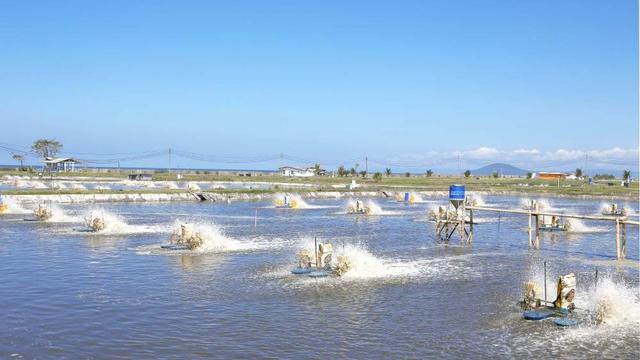
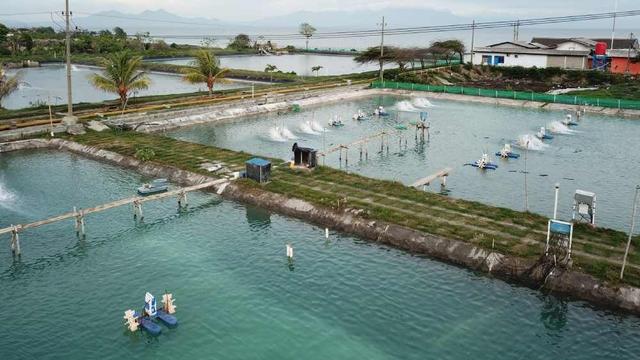
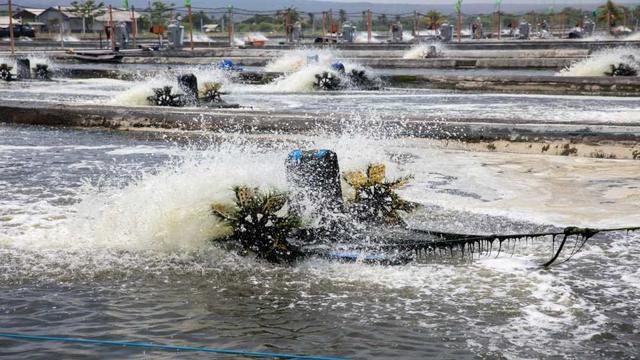
This is where aeration plays a major role. Aerators such as the AT21 ME500 for small to medium ponds, or the ME1500 for larger capacity, both developed by STP’s Aquaculture Technology Department help maintain oxygen supply especially during the night when plankton stops photosynthesizing. Keeping plankton stable is one of the key elements of a successful vannamei operation.
When plankton crashes
Plankton sometimes dies suddenly. The signs: water that was green turns clear or brown overnight, sometimes accompanied by foam and an unpleasant odor. The impact is immediate dissolved oxygen drops sharply and ammonia spikes as the dead plankton begins to decompose.
When this happens: reduce or temporarily stop feeding so that the organic load does not increase; run aerators longer to keep oxygen at a safe level, especially throughout the night; carry out a partial water exchange with clean water prepared in a reservoir pond; and re-grow plankton through light fertilization and a fresh dose of probiotics.
Recovery typically takes several days before water color returns to stability. Regular monitoring is therefore always far less costly than responding to a crash after it has already occurred.
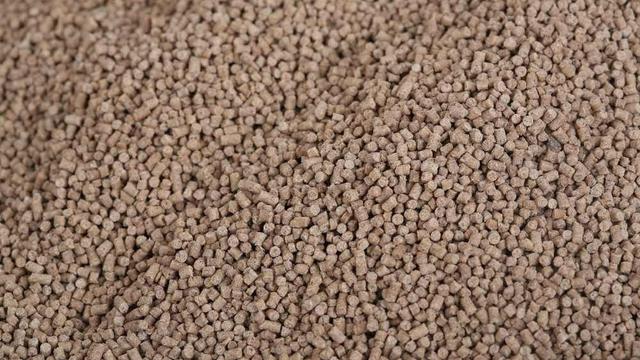
Greening shrimp pond water is fundamentally about deliberately cultivating and maintaining phytoplankton, not waiting for good luck. From sterilizing the pond bottom and filling with filtered water to fertilizing and adding probiotics, every step is aimed at building an ecosystem that provides natural feed, moderates temperature, supplies oxygen, and suppresses pathogens. With consistent turbidity monitoring and adequate aeration, green water can be maintained throughout the entire cycle. If you need support putting together a water management approach suited to your pond’s specific conditions, STP’s technical team has been helping farmers since 1987 as part of JAPFA, including assistance in selecting high-protein shrimp feed in the right portions to keep the organic load in the water under control and harvests as productive as possible.
FAQ
How long does it take to grow green water before stocking?
Generally five to seven days after fertilization before the water turns green and its turbidity stabilizes at 30 to 40 cm. It can take longer during overcast weather, since reduced sunlight slows plankton growth.
How do you measure plankton density in a pond?
Use a Secchi disk. Lower the disk into the water until its pattern is no longer visible, then measure the depth. A reading of 30 to 40 cm indicates ideal plankton density for vannamei shrimp ponds.
What are the signs that green water is starting to go wrong?
Watch for water that is too dark in color, a Secchi disk reading below 25 cm, pH that swings widely between day and night, and dissolved oxygen dropping sharply near dawn. A sudden color shift to clear or brown indicates a plankton crash and requires immediate attention.
How does green water help make vannamei shrimp farming more profitable?
Well-maintained green water provides natural feed through plankton, which reduces dependence on formulated feed and improves the feed conversion ratio (FCR). Stable water also reduces the risk of diseases like AHPND, meaning fewer losses from mass mortality. Together, these factors keep production costs in check and make each harvest more profitable.