A Complete Guide to Farming Barramundi: Environments, Fry Selection, Feed, and Care
General • 2026-07-30
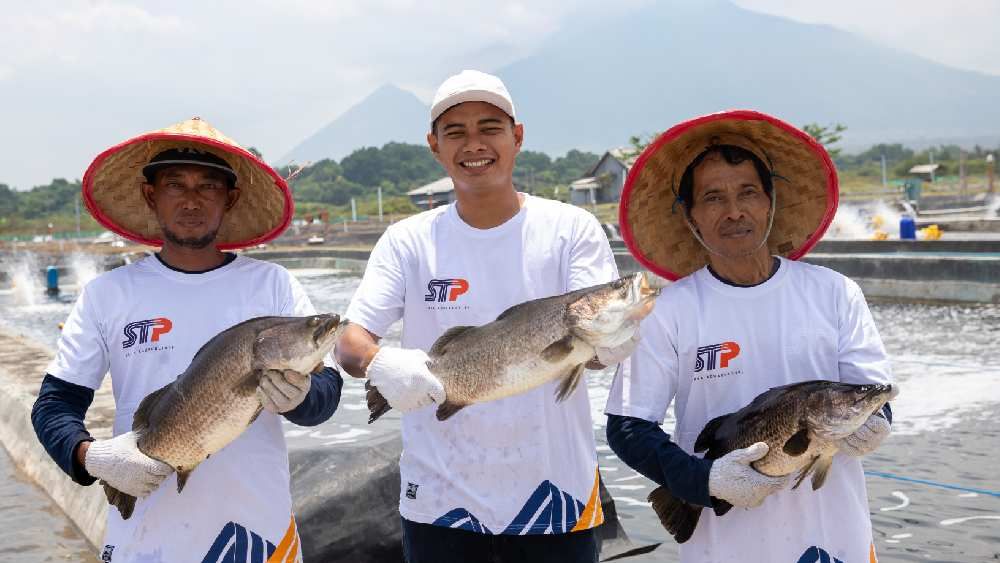
This article discusses the methods for cultivating barramundi, including farming environments, fry selection, feeding strategies, and daily care.
Barramundi (Lates calcarifer), also known as Asian seabass, is increasingly attracting the attention of farmers due to its high selling price, strong market demand both locally and for export, and its highly adaptable nature. Barramundi is euryhaline, meaning it can survive in marine, brackish, and freshwater environments, providing considerable flexibility in choosing a cultivation site.
Despite being resilient, successful barramundi farming still depends on four fundamental factors: the rearing environment, fry selection, feeding, and daily care. This article discusses all four systematically to make them easy for you to apply.
1. Select the Right Cultivation Environment
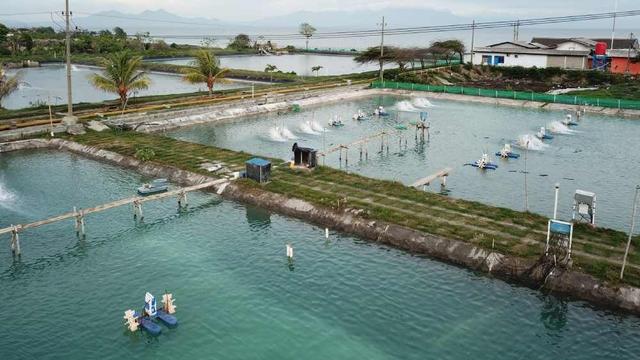
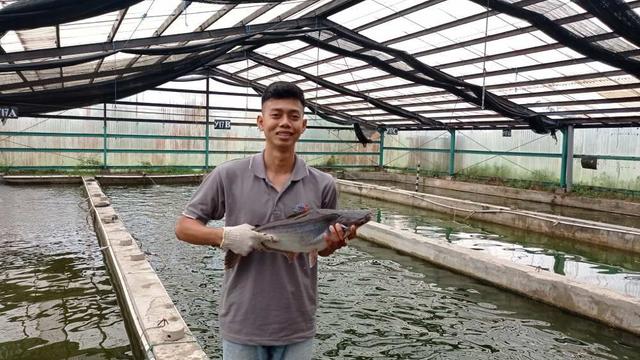
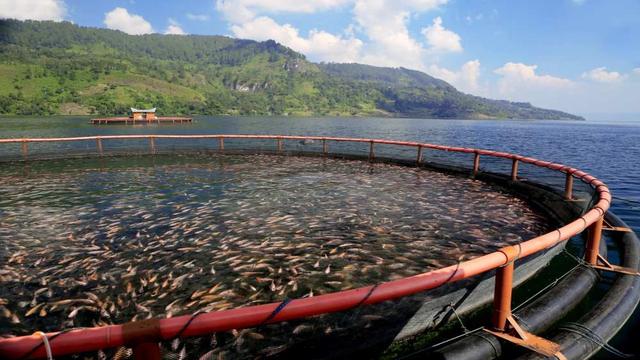
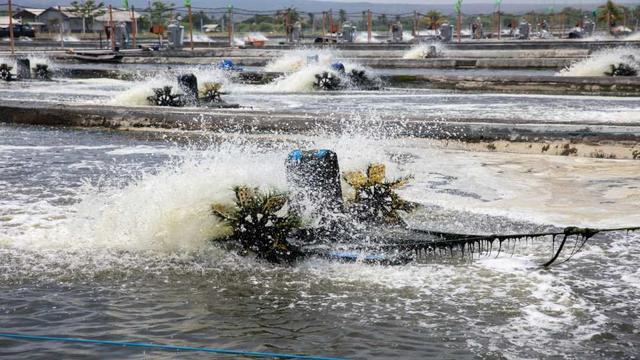
Barramundi is typically cultivated in two ways. First, using floating net cages (KJA) in calm marine or brackish waters protected from large waves. Second, using ponds in coastal areas where salinity can be controlled. Both methods can be successful as long as basic water quality requirements are met.
Several water parameters must be maintained:
- Salinity: Barramundi is tolerant of a wide range, but optimal growth generally occurs between 15 and 30 ppt.
- Temperature: The ideal range is 27 to 32 degrees Celsius.
- Dissolved Oxygen: Keep this above 4 mg/L.
- pH: Keep it stable between 7 and 8.5.
Ensure the location has good water circulation and is far from sources of pollution. For floating net cages, the water depth during low tide should remain sufficient so the nets do not touch the bottom.
2. Choose High-Quality Fry
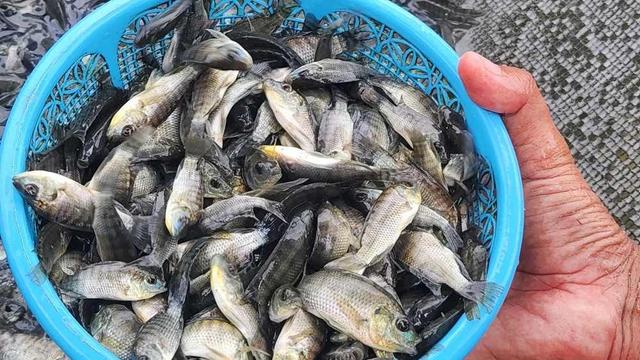
Good fry account for half the success of your cultivation. Choose fingerlings with uniform sizes, typically 5 to 10 cm, that swim actively and respond well to feed. Avoid fry that swim weakly, have pale coloring, or exhibit physical deformities and injuries.
Size uniformity is crucial for barramundi due to their cannibalistic nature. Larger fry will prey on smaller ones if there is a significant size discrepancy. Because of this, many farmers implement thinning and size sorting (grading) from the very beginning. Source your fry from trusted hatcheries that apply health standards to prevent introducing diseases into your cages or ponds.
3. Prioritize Feed Selection for Growth and Cost Efficiency
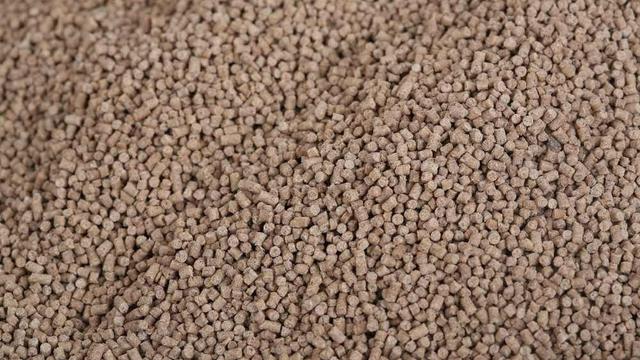
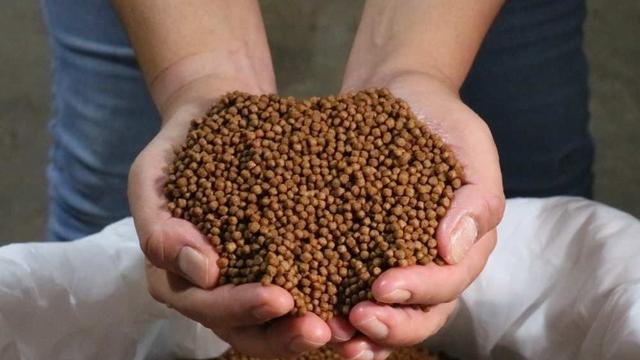
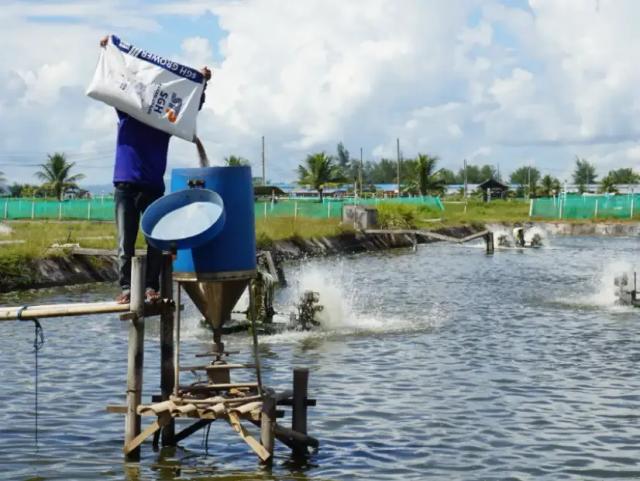
Barramundi are carnivorous fish that require high-protein feed. In the early stages, fry can be given feed with small particles that fit their mouth size, and the pellet size should be increased as the fish grow. Feeding 2 to 3 times a day with portions adjusted to the fish weight helps ensure uniform growth.
Many farmers are now shifting from trash fish (fresh fish) to pellets because they are more practical, offer consistent nutritional quality, and keep the water cleaner. Pellets are also easier to measure, allowing for better FCR control.
For barramundi, STP Feed offers a specialized Barramundi KAE series and marine feeds available for both starter and grower phases, ensuring nutrition is tailored to the fish's growth stage. You can view the details in our barramundi farming product catalog. As a manufacturer operating since 1987 and a part of JAPFA, STP formulates its feed through laboratory and field trials conducted by the internationally certified JAPFA Aquaculture Research Station (JARS) team.
4. Implement Daily Care and Health Management
Routine maintenance is a task that is often underestimated, yet this is where the harvest margin is determined. Several actions must be performed regularly:
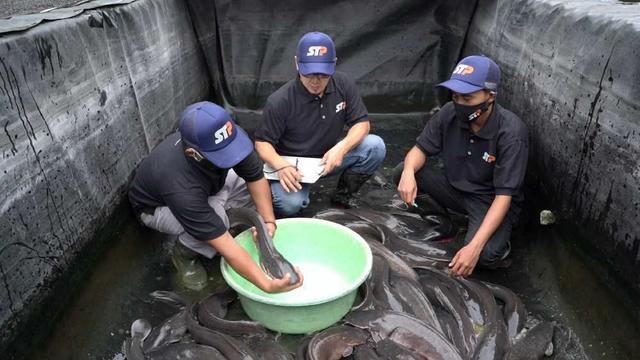
- Grading or thinning: Group the fish by size every few weeks to minimize cannibalism and maintain even growth.
- Net cleaning: In floating net cages, dirty nets obstruct water circulation and lower oxygen levels. Clean or replace the nets regularly.
- Water quality monitoring: Routinely check temperature, salinity, and oxygen levels, especially during season changes or extreme weather.
- Health observation: Pay close attention to the fishes' appetite and behavior. A drop in appetite is often the earliest sign of health issues.
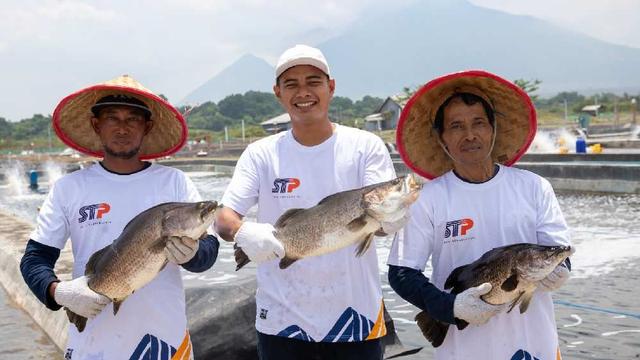
With good management, barramundi generally reach a consumption weight of 500 to 800 grams within approximately 6 to 8 months. If targeting the export market which requires larger sizes, the rearing period simply needs to be extended.
Common Challenges in Barramundi Farming
Beyond cannibalism, there are several challenges that must be anticipated from the start. Extreme weather and heavy rain can cause a sudden drop in salinity in brackish floating net cages, stressing the fish. The solution is to monitor water conditions more frequently during the rainy season and ensure the fish continue receiving nutritious feed to maintain their immune resistance.
Another challenge is disease outbreaks, such as Vibrio bacterial infections and gill parasites, which typically emerge when water quality deteriorates. The most effective prevention remains the same: keep the water clean, avoid overfeeding, and immediately isolate any fish showing symptoms of illness. Providing high-quality feed also helps keep the fishes' immune systems strong, making them less susceptible to infections.
Conclusion
Barramundi farming offers promising prospects as long as its four foundations are maintained: an appropriate environment, healthy and uniform fry, high-quality and phase-appropriate feed, and consistent daily care. Barramundi is indeed relatively resilient, but the best profits always come from meticulous management rather than solely relying on the fish's hardiness. To deepen your understanding of selecting the right aquaculture feed, review STP's guide to the best aquaculture feeds.
Frequently Asked Questions (FAQ)
How long does it take to harvest barramundi? With proper feed and care, barramundi generally reach a consumption weight of 500 to 800 grams in 6 to 8 months. Larger target sizes for export will require a longer cultivation period.
Why do barramundi need frequent grading? Barramundi are cannibalistic by nature. If the sizes in a single enclosure are not uniform, larger fish will prey on the smaller ones. Routine grading suppresses cannibalism while maintaining even growth.
Can barramundi be cultivated in freshwater? Yes, because barramundi are euryhaline and tolerant of various salinity levels. However, optimal growth is typically achieved in brackish water with a salinity of around 15 to 30 ppt.